

What is a Generator Set?
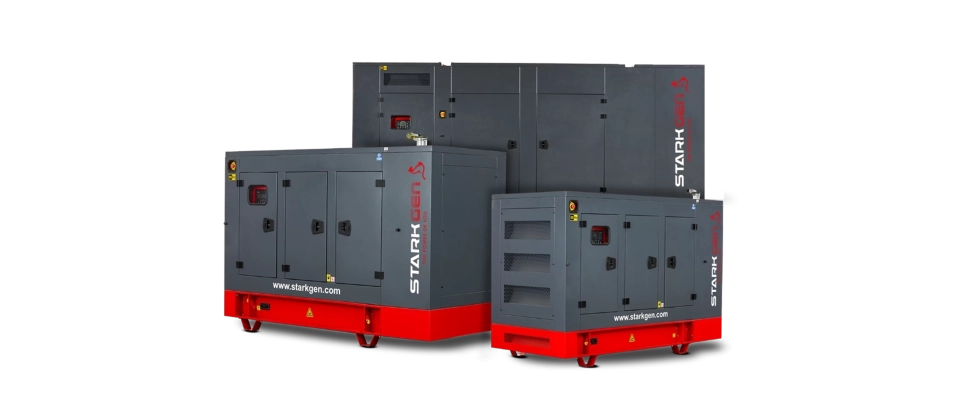
A generator set, also known as Engine-Generator Set, consist of a reciprocating internal combustion (RIC) engine to produce mechanical energy and an electrical generator (alternator) to convert the mechanical energy into electrical energy.
Contact Form
Please Contact Us For More Information
Generator Set (Generator)
A generator set, also known as Engine-Generator Set, consist of a reciprocating internal combustion (RIC) engine to produce mechanical energy and an electrical generator (alternator) to convert the mechanical energy into electrical energy. The engine (RIC), may be compression-ignition engine or spark-igniton engine. Generator sets can be used in various operating modes and can have different power ratings.
Generator Operating Modes:
- Island Mode Operation: In this mode, the generator meets the user's energy needs as the sole source. It is commonly used in locations where there is no public distribution network or where the user decides to generate their own energy.
Island Mode: In this mode, the generator operates as a sole source at the locations isolated from the national or local electrictiy distribution network. - Stand By Mode (Operation During Power Outage): In this mode, although the user's system is normally supplied by the distribution network, the generator automatically comes into operation during a power outage. The generator is automatically activated through its controller mounted on generator set or an Automatic Transfer System (ATS) panel in case of a power outage.
- Parallel Operation Mode: This refers to the electrical connection of a generating set to another source of electrical supply (another genset or a distribution network) with the same voltage, frequency and phase to share the power supply demand.
- Parallel Mode Between Generator Sets in Island Mode: In this mode, multiple generators are used as energy sources for the power supply demand. It is typically preferred based on factors such as continuity of service, redundancy, and fuel consumption optimization.
- Parallel Mode with the Distibution Network: In this mode, generator sets can operate in parallel with the Distibution Network. It is often used to facilitate energy exchange or compensate for absorption peaks not supported by the Distibution Network.
Generator Set Power Ratings:
Generator Set Power Ratings are defined in the ISO8528-1 standard. These ratings are as below
- COP (Continuous Power): COP is defined as being maximum power a generator set can provide at a constant load for an unlimited number of operating hours under conditions specified by the manufacturer. Average load is 100% and no overload capability is available for this rating.
- PRP (Prime Power): PRP is defined as being maximum power which a generating set can provide at variable load for an unlimited number of operating hours under conditions specified by the manufacturer. The average power supplied over a 24-hour period should not exceed 70% of the PRP indicated on the nameplate. The average load may be different according to engine manufacturers. The permissible overload is 10% of the PRP for 1 hour in every 12 hours.
- LTP (Limited Time Running Power): LTP is defined as maximum power available a generator can provide at a constant load up to 500 hours per year, under conditions specified by the manufacturer. Average load is 100% and no overload capability is available for this rating.
- ESP (Emergency Standby Power): ESP is defined as maximum power available a generator can provide at a variable load in the event of a distribution network outage up to 200 hours per year, under conditions specified by the manufacturer. The average power supplied over a 24-hour period should not exceed 70% of the ESP indicated on the nameplate. The average load may be different according to engine manufacturers. No overload capability is available for this rating.
- DCP (Data Center Power): This power rating was introduced recently by engine manufacturers to regulate a power rating for applications in Data Centers (DCCs). DCP defines the maximum power that can be provided continuously or intermittently for an unlimited number of hours per year in a Data Center Application where a reliable distribution network is available. This power is the responsibility of the generator set manufacturer, who must ensure its suitability for the target application according to standards determined by the engine manufacturer (field quality, quality of liquids used, auxiliary accessories that need to be suitable for the installation site).
ATTENTION: The power value must be determined before purchasing a generator, as it is also an important factor in engine selection.
Environmental Reference Conditions: All the performance parameters mentioned above should be declared along with reference environmental conditions. Typical reference values according to ISO8528-1 are as below:
- Temperature: 25°C
- Altitude: 100 m.a.m.s.l.
- Relative Humidity: 30%
- Atmospheric Pressure: 100kPa
Conditions deviated from the specified ones may lead to a drop in performance.
Electrical Fundamental Definitions: Current, Voltage, Power and Frequency
- Electric current is measured in Amperes [A] and represents the amount of electric charge passing through a wire's cross-section per unit time in physics and electrical engineering.
- Electric voltage is measured in Volts [V] and represents the electric potential difference between two points.
- Frequency is measured in Hertz [Hz] and is the fundamental quantity of alternating currents. Due to historical reasons, there are two world standards for power system frequency: 50Hz or 60 Hz. To date, countries operating at different frequencies based on the region still exist. The electricity frequency generated by a generator is proportional to the engine speed and the number of poles of the alternator.
- Electric power is measured in Watts [W] as Active Power and in Volt-Amper [VA] as Apparent power;
- Apparent Power (VA): Measured in Volt-amperes and symbolized by a large "S". It is the theoretical power that can be absorbed by the load; how much of it will be converted into work depends on the efficiency of the load.
- Active Power (W): Measured in Watts and symbolized by a large "P". It is the power physically converted into work. "P" depends on the load and the capacity to convert as much apparent power as possible into active power. The ratio between active power and apparent power is defined as the power factor or "cosf," and the formula regulating them is P=S*cosf.
ISO8528 specifies the generator's nameplate based on a power factor of cosf=0.8. In reality, the power factor of a load can vary and may change depending on the operating phase (for example, it may be different during the starting phase of an electric motor compared to full operating conditions). Low power factors encountered in systems not only affect performance but also impact operating costs.
Starkgen Generator Advantages
Ultra Silent Canopy
Special Sound Proof Canopies,
Unique Sound Insulation
Amazing Durability
Salt Test Endurance of Over 3000 Hours
Tailor-Made Solutions
Special Customized Generators up to 3MWe
%100 First Step Load
Full Load Acceptence Capabilty

Stackable Compact Design
Up to 24 Generators Can Be Loaded in Truck
20% Fuel Saving
High Performance, Fuel Efficiency
Compact and Modular Design
Customize Design According to Your Demand
Heavy Duty Baseframe
Maximum Performance with Heavy Duty Baseframe
Starkgen Generator Advantages
Ultra Silent Canopy
Special Sound Proof Canopies , Unique Sound Insulation.
Amazing Durability
Salt Test Endurance of Over 3000 Hours
Customized Solutions
Special Customized Generators up to 3MWe
100% First Step Load
Full Load Acceptance Capabilty
Stackable Compact Design
Up to 24 Generators Can Be Loaded in Truck
20% Fuel Saving
High Performance, Fuel Efficiency
Compact and Modular Design
Customize Design According to Your Demand
Heavy Duty Baseframe
Maximum Performance with Heavy Duty Baseframe
Difference of Starkgen Generators
Power options ranging from 9 to 2500 kVA.
Robust, Long-lasting and resistant to environmental conditions.
Stackable design to save from logistic cost.
Comap AMF8, AMF9, AMF25 and IG200 model controllers.
Compact and Modular design with additional features.
Ultra Silent Canopy design.
Easy handling and loading.
Heavy Duty Baseframe.
Lubricant and Antifreeze included.
Easy Service and Maintenance with large and rigid doors.
Different Canopy options depends on your needs.
Digital fuel level sensor.
Turkish-origin BAŞAK motor generator sets.
Special roof for rain water flow.
Customized solutions for different sectors.
Remote monitoring system.
High Performance and Maximum Quality
Starkgen is a global corporation that designs, manufactures and distributes power generation equipment worldwide. The company adds incomparable application and engineering know-how, excellent design and service capabilities, delivering value beyond the equipment it produces. The equipment that the brand offers includes diesel, gas, marine generator sets and paralleling systems for standby emergency power, prime power, peak power and distributed power.

Frequently Asked Questions
The primary difference between kW (kilowatt) and kVA (kilovolt-ampere) is the power factor. kW is the unit of real power and kVA is a unit of apparent power (or real power plus re-active power). The power factor, unless it is defined and known, is therefore an approximate value (typically 0.8), and the kVA value will always be higher than the value for kW.
In relation to industrial and commercial generators, kW is most commonly used when referring to generators in the United States, and a few other countries that use 60 Hz, while the majority of the rest of the world typically uses kVa as the primary value when referencing generator sets.
To expand on it a bit more, the kW rating is essentially the resulting power output a generator can supply based on the horsepower of an engine. kW is figured by the horsepower rating of the engine times 0.746. For example if you have a 500 horsepower engine it has a kW rating of 373. The kilovolt-amperes (kVA) are the generator end capacity. Generator sets are usually shown with both ratings. To determine the kW and kVA ratio the formula below is used.
0.8 (pf) x 625 (kVA) = 500 kW
Power factor (pf) is typically defined as the ratio between kilowatts (kW) and kilovolt amperes (kVa) drawn from an electrical load, as discussed in more detail in the question above. It is determined according to the connected load of the generator. The pf on a generator's nameplate relates kVa to its kW rating (see formula above). Generators with higher power factor transfer energy to the connected load more efficiently, while generators with lower power factor are not as efficient, resulting in increased power costs. The standard power factor for a three-phase generator is 0.8.
Backup power generators are mostly used in emergencies such as power outages. Ideal for applications that have another reliable continuous power source such as utility power. Its use is generally recommended only during power outages and during regular testing and maintenance.
Prime power ratings can be defined as having “unlimited run time” or as a generator that will be used primarily as a primary power source and not just for standby or backup power. A generator with premium power can provide power in a situation where no auxiliary source is available, as is often the case in industrial applications such as mining or oil and gas operations located in remote areas where the grid is inaccessible.
Continuous power is similar to mains power but has a baseload rating. It can continuously power a constant load, but does not have the ability to handle overload conditions or operate with variable loads. The main difference between prime and continuous power is that prime power generator sets are set to have maximum power for an unlimited number of hours at a variable load and often include overload capacity of 10% or more for short periods.
The generator leads are designed so that they may or may not be reconnected. If a generator is listed as reconnectable, the voltage can be changed; therefore, if it cannot be reconnected, the voltage cannot be changed. 12-lead reconnectable generator leads can be switched between three- and single-phase voltages; However, note that switching from three phase to single phase will reduce the machine's power output. The 10-pin can be reconnected, converted to three-phase voltages but not single-phase.
An automatic transfer system (ATS) transfers power from a standard source, such as the utility, to emergency power, such as a generator, when the standard source fails. The ATS detects a power interruption in the line and then signals the engine panel to start. When the standard source is restored to normal power, the ATS transfers power back to the standard source and shuts down the generator. Automated Transfer System is often used in high availability environments such as data centers, production plans, telecommunication networks, etc.
Generator sets can be connected in parallel for redundancy or capacity requirements. Paralleling generators allow you to combine them electrically to combine their power outputs. Connecting the same generators in parallel will not cause any problems, but some extensive consideration should be given to the overall design based on the primary purpose of your system. Unlike generators, if you are trying to parallel connect the design and installation can be more complex and you need to keep in mind the effects of motor configuration, generator design and regulator design, just to name a few. For more information and details on paralleling backup generators in critical systems, check out this informative article.
In general, most commercial generators can be converted from 60 Hz to 50 Hz. The general rule of thumb is that 60 Hz machines run at 1800 Rpm and 50 Hz generators run at 1500 Rpm. On most generators, changing the frequency will only require reducing the engine speed. In some cases, replacement of parts or further modifications may be necessary. Larger machines or machines already set to low RPM are different and should always be evaluated on a case-by-case basis. We prefer to have our experienced technicians thoroughly inspect each generator to determine feasibility and what will be required.
Having a generator that can meet all your electricity generation needs is one of the most critical aspects of the purchasing decision. Whether you're dealing with mains power or backup power, if your new generator can't meet your specific needs then it won't do anyone any good because it can put undue stress on the unit and even damage some connected devices. BT. Determining exactly what size generator to buy is often very difficult and involves a number of factors and considerations. For more detailed information on this subject, you can visit our extended article titled Generator Sizing.
Standing out among generator types, diesel designs are becoming increasingly popular. Popularly called diesel fuel, it offers a more ideal usage for many people.
Diesel generator models that generate electrical energy are instantly activated in areas where there is no electricity or in times of sudden power outages, thus ensuring an uninterrupted electricity supply.
Offering use for different purposes in a wide variety of areas, diesel generator models have a unique working principle. In this process, diesel fuel is first burned by the engine with the help of oxygen. This type of fuel then spontaneously combusts, releasing a certain level of energy as the temperature rises. This energy pushes the pistons, creating the energy of motion. The engine in diesel generator models transfers the motion energy to the alternator section. The alternator converts this motion energy into electrical energy and makes it available for use. Whether it is about generator prices, diesel models, or different issues, you can always contact us and get support from our experienced team.
When diesel generators are considered as standard production, different options emerge in the power ranges between 5 kVA and 3550 kVA. Thus, anyone who wants will have the opportunity to effortlessly access diesel generator models that meet their needs and expectations. For this reason, generator prices may differ between diesel models. In addition, such devices are designed and produced with or without a cabin.
If you do not want to choose among the standard diesel generator types, Starkgen also produces special products for the project. In this way, the most efficient and high-performance generator is obtained for the project. Diesel generator prices vary depending on the technical features of the device in specially produced models.
Diesel generator prices are quite different from each other. Because there are many factors affecting the price of diesel generator prices. Chief among these are the technical features of the devices. In particular, the power of such devices has a significant impact on prices. The diesel generator types we offer range between 9 kVA and 2800 kVA in terms of power. Therefore, during the purchase, you need to focus on your intended use for this device and determine the requirements for the model you need. In this way, you can choose the right option and get the advantage of having a high-quality model without straining your budget.
You can also contact us to get detailed information about the generator models suitable for your field and purpose during the selection process and to find answers to the questions in your mind. We offer you diesel generator options for affordable prices. With our experienced team, you will have the privilege of completing the purchasing process as easily and comfortably as possible.
When the fuel tank of the diesel generator runs out of fuel, sometimes it may not start again due to air intake in the fuel suction line before fuel. In such cases, you can ensure fuel flow to the engine through the hand pump on the motor. If this doesn't work, the bolt of the fuel pipe from the fuel pump to the cylinders can be removed while the generator is running to release the air.
In a diesel-fueled generator, kinetic energy is produced by the engine. This energy is transmitted to the alternator. Thus, with the help of the alternator, kinetic energy is converted into electrical energy and made available in the electrical system.
For diesel generator maintenance, the battery charge and the generator engine coolant level are checked. In addition, the generator engine oil level and oil leakage control are performed. It is also necessary to look inside the generator engine tank to check whether there is enough diesel oil.
At Generator Supply, many of our customers trust us to provide accurate and informative answers to their electrical, engine and generator questions. As a result, many questions arise every day, some of which are quite common and we answer these questions quite often. We decided to launch a list of Frequently Asked Questions to better inform our customers and website visitors about the most popular topics and issues we encounter. We plan to expand this section over time and add other frequently asked questions we encounter. If you have other questions you would like to be featured here, please email us with your suggestions at info@starkgen.com or export@starkgen.com; We'll do our best to answer them and include them here.